AI receptionist
AI Receptionist for Small Business: Benefits, Costs, and How to Choose One
Compare AI receptionist vs human front desk for small businesses. Learn benefits, pricing factors, must-have features, and how CallSeeds AI phone agents capture more leads.
· · 12 min read
Small businesses live and die by inbound conversations. A clinic that misses booking calls, a contractor who never picks up during jobs, or a SaaS founder stuck on every support line — all lose the same thing: trust and revenue. An AI receptionist for small business teams is designed to fix that gap without the cost of a full-time front desk for every hour you are open (or closed).
This article explains what an AI receptionist actually does, when it beats traditional answering services, what it should cost, and how to choose a platform that sounds natural enough for real customers.
What is an AI receptionist?
An AI receptionist (also called an AI phone agent or virtual phone agent) answers inbound business calls using conversational AI. Callers speak normally — they do not need to navigate a maze of keypad menus. The agent greets them in your brand voice, understands intent, answers FAQs, captures lead details, books appointments when configured, and transfers to a human when the situation requires it.
Unlike chatbots that live on websites, an AI receptionist works on the channel customers already use when urgency is high: the phone.
Why small businesses are switching to AI phone agents
1. Coverage without headcount
A full-time receptionist is valuable — and expensive — especially when you need nights, weekends, or multi-language coverage. AI phone agents give you always-on business phone answering for the hours humans cannot staff economically.
2. Faster first response
Speed-to-answer is a competitive advantage. Callers who reach a helpful voice in seconds are more likely to book, buy, or wait for a callback than callers who hit voicemail.
3. Consistent quality
Human teams have great days and distracted days. A well-configured AI receptionist delivers the same greeting, the same qualification questions, and the same compliance-aware phrasing every time.
4. Structured lead capture
Paper notes and forgotten callbacks kill conversions. Modern AI customer support phone systems log transcripts, summaries, and lead fields into a dashboard your team can act on.
5. Multilingual reach
In markets like India, callers may prefer English, Hindi, or Punjabi depending on the region and audience. An AI receptionist that handles multiple languages helps you sound local without hiring separate staff for each language line.
AI receptionist vs human receptionist vs traditional answering service
Use this comparison when deciding how to staff your phones:
- Human receptionist: Best for complex, high-touch, in-office coordination. Limited by shifts and concurrent calls.
- Traditional answering service: Live operators follow scripts. Quality varies; monthly minimums are common; callers can feel the “call center” experience.
- AI receptionist: Instant pickup, consistent scripts, scalable volume, strong for FAQs/intake/after hours. Needs clear knowledge and escalation rules.
Most small businesses do best with a hybrid model: AI handles first response and overflow; humans handle exceptions, negotiations, and VIP relationships.
Must-have features in an AI receptionist
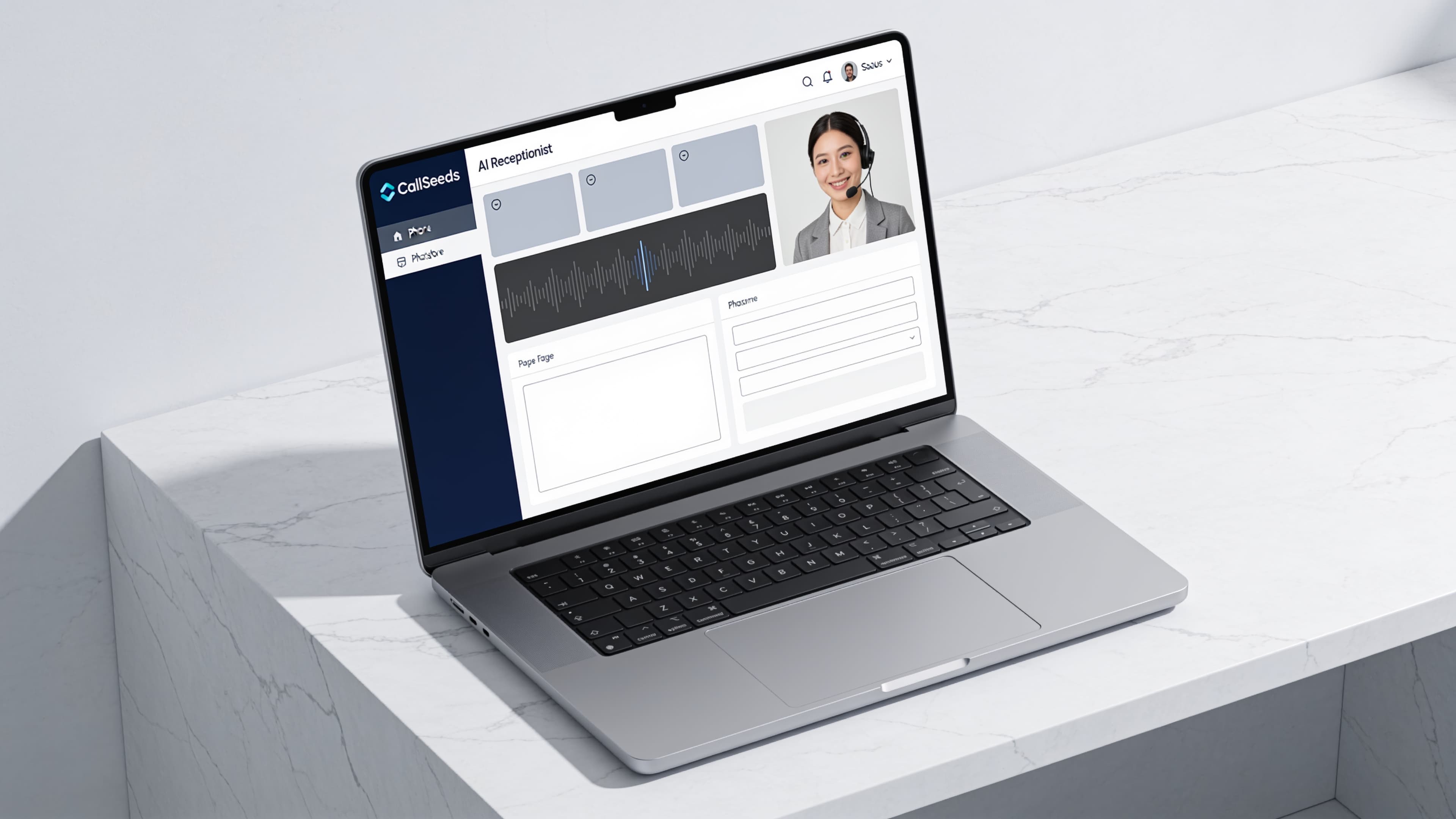
Not every “AI phone” product is ready for real customers. Prioritize platforms that offer:
- Natural conversational voice (not robotic TTS)
- Custom greetings, tone, and business knowledge
- Clear human handoff / transfer rules
- Call recordings, transcripts, and summaries
- Automatic lead capture from conversations
- Spam and robocall screening
- After-hours and overflow routing
- Transparent, usage-based pricing
- Languages your customers actually speak
What does an AI receptionist cost?
Pricing models vary. Some vendors charge per seat, some per phone number, and some per minute of talk time. For small businesses, pay-as-you-go voice minutes are usually fairest: you pay for real usage instead of a bloated monthly plan that assumes call-center volume.
With CallSeeds, you pick a voice vendor and model (OpenAI, ElevenLabs, or Sarvam) at transparent pass-through rates, and your first phone number is free for the first month (then a modest monthly number fee). There are no seat fees and no lock-in — which matters when you are still learning your call volume.
When you compare cost, include the full picture:
- Salary + benefits of a receptionist (or overtime for owners)
- Missed-call revenue you currently lose
- Answering-service monthly minimums
- Time spent replaying voicemails and chasing incomplete messages
Best use cases for small businesses
- Clinics and dental offices: appointment requests and hours FAQs
- Home services: emergency triage vs next-day bookings
- Real estate and brokers: lead intake while agents are on site
- Retail and restaurants: reservations, directions, special hours
- B2B services: qualification before sales callbacks
- Professional firms: after-hours coverage without a night receptionist
How to roll out an AI receptionist without confusing customers
Start with one high-value line
Do not boil the ocean. Put AI on after-hours first, or on a dedicated sales/intake number. Measure answer rate and lead quality for two weeks before expanding.
Write a short knowledge brief
Give the agent your hours, services, service areas, pricing ranges (if appropriate), parking/directions, and escalation rules. Vague knowledge produces vague answers.
Be transparent when it helps trust
Many businesses greet callers with a warm, clear introduction that the assistant can help with common requests and connect them to a person for complex issues. Clarity beats gimmicks.
Review real calls weekly
Listen to transcripts. Fix wrong answers. Add missing FAQs. Tighten when the agent should transfer. Continuous improvement is what turns automated phone support from “demo” into a reliable teammate.
Common objections (and honest answers)
“Won’t customers hate talking to AI?”
Customers hate waiting, voicemail, and endless menus more than they hate a helpful voice that solves their problem. Natural-sounding AI phone agents succeed when they are useful and when human transfer is easy.
“What if the AI makes a mistake?”
Treat the agent like a new hire: train it, review work, and set guardrails. Limit what it can promise. Escalate medical, legal, billing disputes, and angry callers to humans.
“We are too small for this.”
Small teams often benefit most — because every missed call is a larger percentage of monthly revenue, and owners cannot personally answer every ring forever.
Why CallSeeds for small business teams
CallSeeds gives you AI phone agents that answer real business calls with natural conversation, custom greetings, and languages your customers use. You get call history, lead capture, spam screening, and a team dashboard — without enterprise complexity or seat-based pricing.
If you are evaluating an AI receptionist for small business growth, start with your noisiest pain: after-hours misses or busy-hour overflow. Put CallSeeds on that line, review the first week of calls, and decide from real results — not a slide deck.
Put an AI phone agent on your line
CallSeeds answers business calls with natural AI agents — including after-hours coverage, lead capture, and team dashboards. Start free and cover the rings you currently miss.
Start free with CallSeeds